

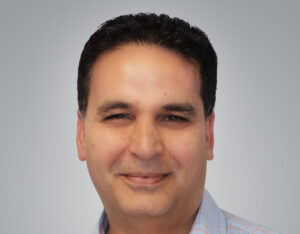
Shahid Khan
Role: Director, Specialty Incentives
Years in Tax Field: 15+ years
Area of Expertise: Specialty Incentives, Federal and State Tax Incentives, Technical Qualification and Substantiation, IRS and State Examination Support, AI-Enabled Tax Workflows
Notable Experience:
- More than 15 years specializing in R&D tax credits and incentives, across the full engagement lifecycle from technical qualification through IRS and state examination support.
- Served as Managing Director and Director at BPM LLP, advising clients on R&D tax credits and incentives.
- Spent eight years at KPMG US in Santa Clara, most recently as a Senior Manager focused on R&D tax credits.
- Has led complex R&D tax credit studies for companies across technology, software, manufacturing, automotive, e-commerce, and life sciences.
Overview
Professional Bio
Shahid Khan is a Director in Exactera’s Specialty Incentives practice, where he brings more than 15 years of experience specializing in R&D tax credits and incentives. He helps companies identify, substantiate, and maximize valuable tax benefits while managing technical and compliance risk, and has led complex R&D tax credit studies for clients across technology, software, manufacturing, automotive, e-commerce, and life sciences.
Before joining Exactera spent four years at BPM LLP, most recently as Managing Director, and eight years at KPMG US, where he served as a Senior Manager in the R&D tax credits practice — experience spanning the full engagement lifecycle, from technical qualification and quantitative analysis through documentation, federal and state incentives, and support during IRS and state examinations.
At Exactera, he is focused on combining deep R&D tax expertise with emerging, compliance-grade AI capabilities to strengthen analysis, documentation, and the client experience. Much of his career has also been spent building and leading high-performing teams and translating complex tax rules into practical solutions that align with a company’s broader business objectives.
Perspectives
What I’ve learned about specialty incentives:
The credit is rarely won or lost on the calculation. It is won on whether you can explain, in plain language, why the work qualified — what the company did not know when it started, and what it did to find out. The strongest studies are the ones where the technical story and the numbers hold each other up, and getting there means talking to the engineers doing the work, not just pulling the wage data.
What surprised me the most about specialty incentives:
How quickly the tooling is changing after years of it barely changing at all. I have spent most of my career in a field where the process was largely manual and the real constraint was hours in the day. Applying AI to this work has been a genuine surprise — not because it replaces judgment, but because it clears away the parts that were never judgment in the first place and gives the team room to do the thinking that actually matters.
My greatest strengths are:
Turning complexity into something a client can act on, and building teams that can do the same. I am comfortable deep in the technical detail — qualification standards, state-by-state rules, examination posture — but the value shows up when that detail becomes a clear recommendation. I also care a great deal about developing the people around me; most of the work I am proudest of was delivered by my team.
